
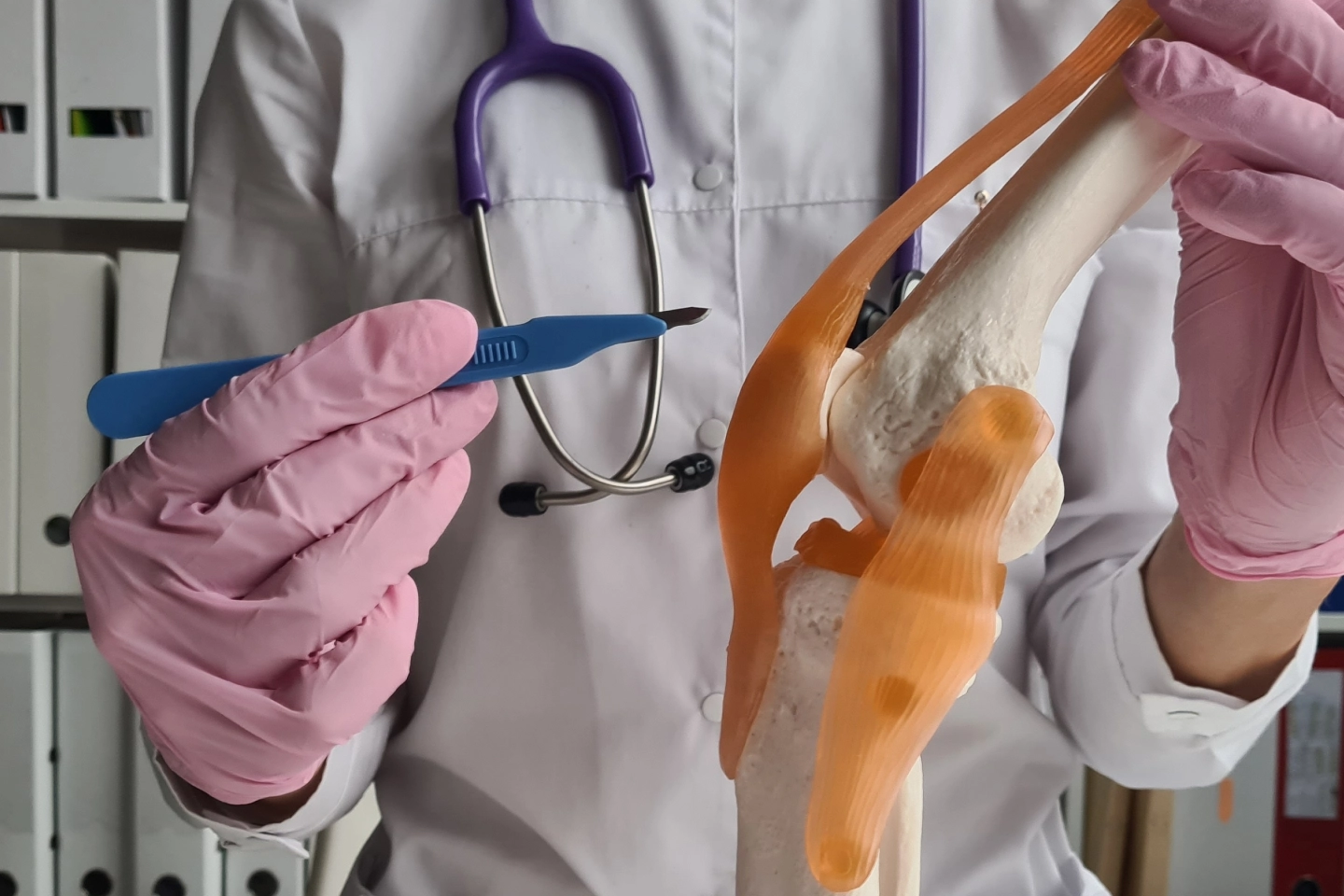
The knee is one of the most vital and complex joints in the human body. It allows smooth movement and bears the body’s weight during walking, climbing, and sitting. When arthritis damages the knee joint, daily activities can become painful and difficult.
Dr. Vivek Gupta, Orthopedics Specialist, explains that while conservative treatments such as physiotherapy, medications, and injections are often tried first, some patients may benefit from knee arthroscopy — a minimally invasive procedure that helps diagnose and treat certain types of arthritis-related problems.
Understanding Knee Arthritis
Arthritis of the knee occurs when the cartilage — the protective tissue covering the ends of bones — wears down over time. This results in pain, swelling, stiffness, and difficulty in bending or straightening the knee.
There are several types of knee arthritis:
- Osteoarthritis: The most common type, caused by age-related wear and tear.
- Rheumatoid Arthritis: An autoimmune condition that causes inflammation in the joint lining.
- Post-Traumatic Arthritis: Develops after a knee injury or fracture.
As the disease progresses, the smooth cartilage erodes, bones rub together, and bone spurs may develop — all of which lead to increasing discomfort and reduced mobility.
What Is Knee Arthroscopy?
Knee arthroscopy is a minimally invasive surgical technique where the surgeon inserts a small camera (arthroscope) through tiny incisions to visualize the inside of the joint. Special instruments are then used to remove or repair damaged tissues.
Unlike open surgery, arthroscopy involves smaller cuts, less pain, minimal scarring, and a quicker recovery period.
Dr. Vivek Gupta explains that arthroscopy can be both diagnostic and therapeutic — it helps the doctor see what’s happening inside the joint and treat specific problems at the same time.
When Is Knee Arthroscopy Useful For Arthritis?
Knee arthroscopy is not a universal solution for all arthritis patients. It works best in early or localized arthritis, where certain parts of the knee joint are damaged but not completely worn out.
Here are the situations where it can be beneficial:
1. Loose Bodies or Debris in the Joint
In some cases, arthritis leads to the formation of small bone or cartilage fragments that float inside the joint, causing locking, catching, or sharp pain. Arthroscopy can remove these loose bodies, improving joint motion and comfort.
2. Torn Meniscus or Damaged Cartilage
Patients with early osteoarthritis often have meniscus tears or small cartilage flaps. Arthroscopic surgery allows the surgeon to trim or repair these tissues, relieving pain and improving knee function.
3. Synovitis (Inflamed Joint Lining)
Inflammation of the joint lining, known as synovitis, can cause persistent swelling and pain. Through arthroscopy, the inflamed tissue can be removed (synovectomy), offering significant relief.
4. Early-Stage Arthritis
For individuals with mild to moderate cartilage wear — where joint alignment is good, and the damage is not widespread — arthroscopy may delay the need for more extensive procedures like knee replacement.
When Knee Arthroscopy May Not Be Helpful
Dr. Vivek Gupta emphasizes that arthroscopy is not effective in advanced arthritis where cartilage loss is severe and bone surfaces are exposed. In such cases, procedures like partial or total knee replacement may be more appropriate.
Arthroscopy cannot “cure” arthritis or regrow cartilage; rather, it helps address mechanical issues that cause pain or limit movement.
Benefits Of Knee Arthroscopy
- Minimally Invasive: Small incisions and faster healing.
- Short Hospital Stay: Usually done as a daycare or same-day procedure.
- Less Post-Operative Pain: Compared to open surgery.
- Faster Recovery: Most patients return to routine activities within a few weeks.
- Accurate Diagnosis: Direct visualization of joint structures.
Recovery After Arthroscopy
After the procedure, patients are advised to:
- Use ice packs to reduce swelling.
- Keep the leg elevated for a few days.
- Gradually resume walking with the help of a physiotherapist.
- Perform prescribed knee-strengthening exercises regularly.
- Avoid high-impact activities until cleared by the doctor.
Most patients notice improved joint movement and reduced pain within 3–6 weeks, though recovery depends on the extent of damage treated.
Alternatives And Complementary Treatments
Even if arthroscopy is not suitable, there are several other treatment options for knee arthritis, including:
- Medications: Anti-inflammatory drugs to reduce pain and swelling.
- Injections: Corticosteroids or hyaluronic acid to lubricate the joint.
- Physical Therapy: Strengthens surrounding muscles and improves stability.
- Weight Management: Reduces pressure on the knee joint.
- Joint Replacement Surgery: Recommended for severe arthritis not responding to other methods.
FAQs On Knee Arthroscopy For Arthritis
1. Is knee arthroscopy a permanent solution for arthritis?
Not always. It provides relief in selected cases with mild arthritis or mechanical problems but cannot reverse advanced cartilage loss.
2. How long does it take to recover from arthroscopy?
Most people can resume normal activities in about 4–6 weeks, depending on the extent of the procedure.
3. Will I need physiotherapy after surgery?
Yes. Physiotherapy plays a vital role in restoring knee strength, flexibility, and balance after arthroscopy.
4. Are there risks associated with the procedure?
As with any surgery, there are small risks such as infection, stiffness, or bleeding, but these are rare when performed by experienced surgeons.
5. Can arthroscopy delay knee replacement surgery?
Yes. In early stages of arthritis, removing damaged tissue or loose bodies can delay the need for major surgery by improving joint function.
Expert Orthopedic Care By Dr. Vivek Gupta
Living with knee pain doesn’t have to mean giving up your mobility or comfort. Early diagnosis and appropriate treatment can make a huge difference in managing arthritis effectively.
Dr. Vivek Gupta, an experienced Orthopedics Specialist, provides advanced care for arthritis and knee disorders. From accurate diagnosis to minimally invasive procedures like knee arthroscopy, he focuses on restoring mobility, reducing pain, and improving quality of life.
If knee pain or stiffness is limiting your daily activities, it’s time to seek expert advice.
Consult Dr. Vivek Gupta Today
Regain comfort, strength, and confidence in every step. Schedule your consultation with Dr. Vivek Gupta for personalized evaluation and advanced orthopedic care.


